
Power cuts don’t wait for a convenient time. That’s why we’ve built one of the most capable power rental fleets in India from compact 15 kVA generators for small sites all the way to multi-megawatt setups for full-scale industrial operations. We’ve been handling power rental projects for over 40 years. We've handled emergency shutdowns, long-term base-load supply, and planned maintenance outages, and we know what it takes to keep things running smoothly.
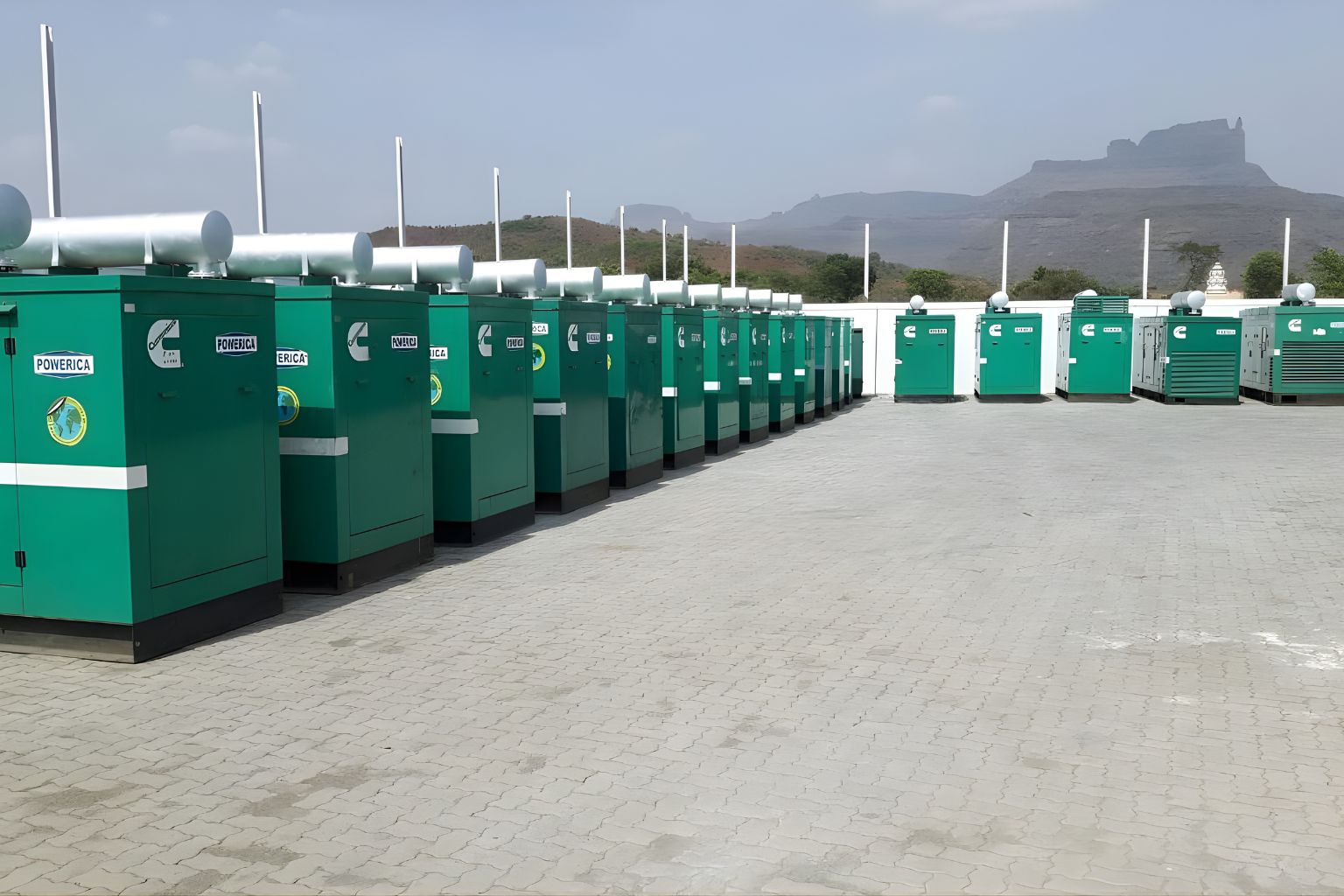
Our diesel generator fleet covers the full range of industrial power requirements. Every unit in our fleet is housed in an ISO weatherproof container, which protects the equipment and simplifies deployment: no shed required, no exposed cabling, and no weather risk. The generators are maintained to operate at full capacity even in peak Indian summer temperatures, which is a problem diesel generators frequently fail to solve.

When your own power supply goes down or isn't available on site, you need a generator that starts up and holds load without issue. We offer power units starting at 15 kVA, suitable for lighter loads, and scaling up to 2500 kVA, ideal for substantial industrial operations. For even greater power demands, we can link several units together.
Our equipment is utilized for a range of applications, including temporary power for construction, backup power during scheduled maintenance, emergency support for unplanned outages, and sustained power supply for projects in remote locations. Each unit undergoes thorough pre-deployment servicing by our engineers and receives continuous support throughout the rental duration.
When it comes to reliable power solutions, our diesel generators on rent stand out as the epitome of excellence. Equipped with the latest power equipment, our diesel generators draw maximum reliable power, making them a dependable choice for various industrial requirements. Whether you need temporary power solution equipment for a construction site, remote project, or backup power during planned maintenance, our diesel generators deliver the performance you can trust.
• Output range: 15 kVA to 2500 kVA
• ISO container housing, weatherproof, lockable, ready for outdoor deployment
• Rated to full capacity at 45°C ambient; no derating required
• Synchronization-capable for parallel operation
• Available in single-phase and three-phase configurations
• Compatible with AMF (Automatic Mains Failure) panels for unattended operation