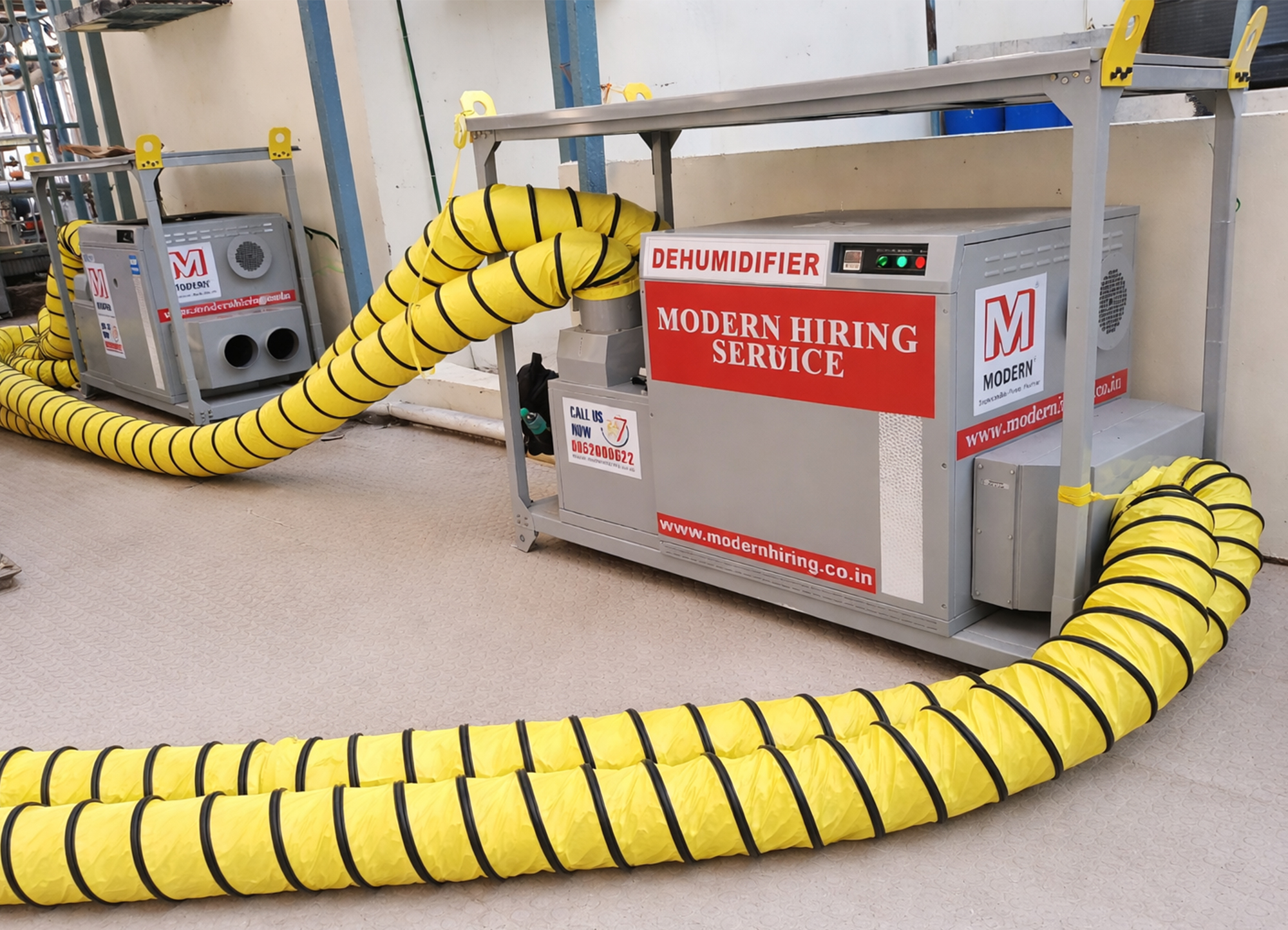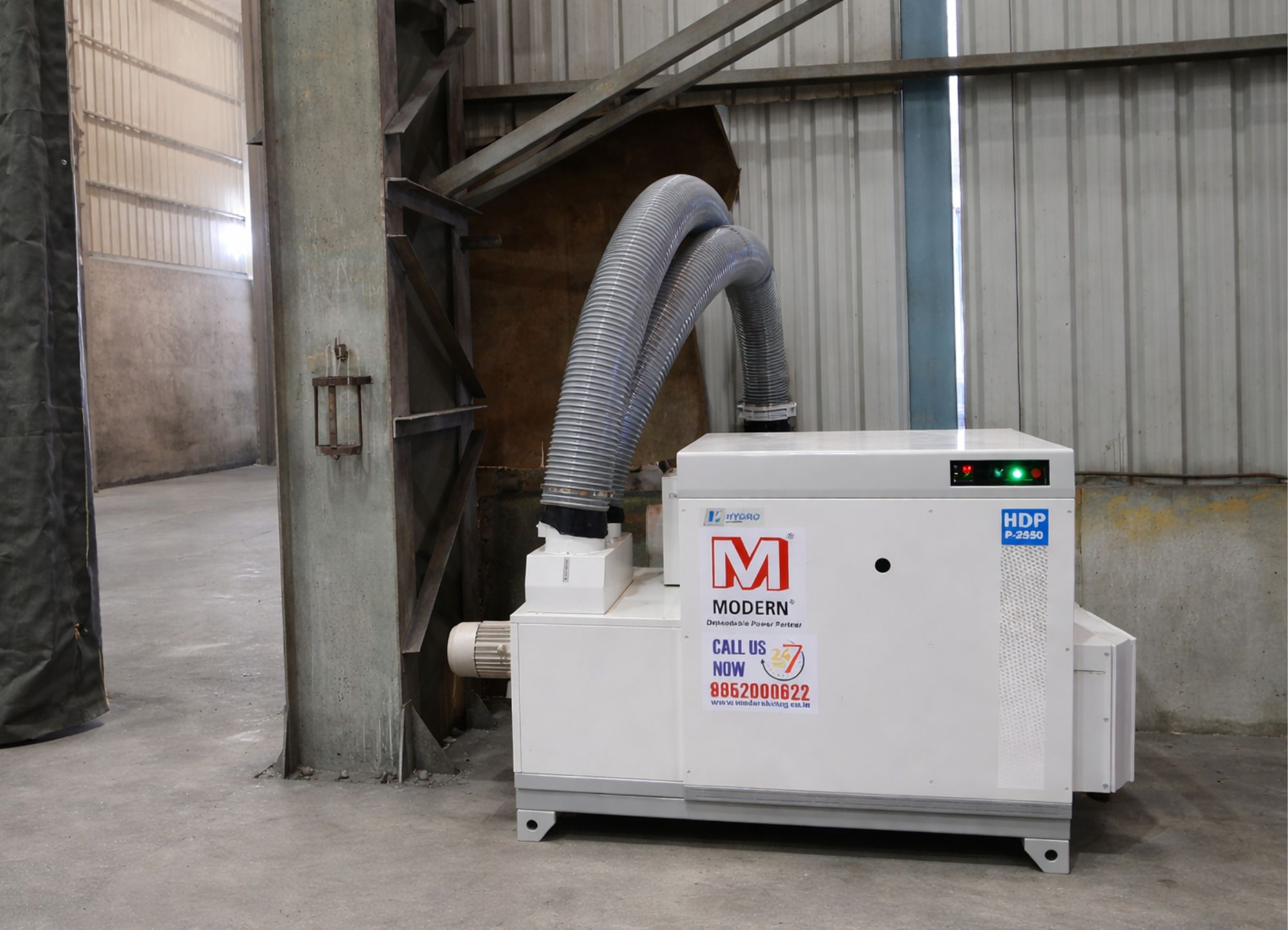

Modern Hiring Service has a wide range of dehumidifiers that are suitable for any commercial and industrial application to maintain humidity in dwellings, preferably ranging from 30 to 50%.
We are providing instant solutions by supplying industry-leading, robust units to any negative impact of excessive moisture in certain climate conditions, assisting with humidity levels in paint drying, wood treatment, material drying, and internal fit-outs.
Our expertise team will advise our customers with suitable solutions to overcome any critical and emergency situations by providing suitable temperature control equipment.
.jpg)
Dehumidifiers are also used in industrial climatic chambers to reduce relative humidity and the dew point in many industrial applications, from waste and fresh water treatment plants to indoor rooms where the control of moisture is essential.
Our Fleet of Dehumidifiers
Electric Refrigeration dehumidifiers
Conventional type
Spray dehumidifiers
Makeshift dehumidifiers
Thermoelectric dehumidifiers
Industries We Supply
Printing
Good Packaging & processing
Museum
Events
Battery / Panel Manufacturing
Humidity control is very important in industries where the weather has a direct effect on the quality, safety, and performance of products and equipment. Modern Hiring Service helps with humidity control needs in a number of fields, such as
Pharmaceutical Manufacturing
Keeping humidity levels in production areas, clean rooms, and storage facilities under control to protect product quality and follow the rules.
Food Processing & Packaging
Keeping moisture from getting into the products and keeping their quality during the manufacturing and packaging processes.
Electronics & Semiconductor Manufacturing
Keeping sensitive electronic parts safe from damage caused by moisture during storage and production.
Data Centres & Electrical Facilities
Stopping condensation and moisture buildup that can hurt important infrastructure and electrical equipment.
Shipbuilding & Marine Engineering
Keeping humidity under control during shipbuilding, maintenance, and equipment installation to avoid damage to materials and corrosion.
Construction & Infrastructure Projects
Helping with drying processes on construction sites and keeping humidity levels in check in closed spaces.