
Boom lifts are a reliable choice when work requires extended reach along with flexibility in movement. They are designed to help operators access elevated areas safely and efficiently, especially in demanding work conditions.
Unlike standard access equipment, boom lifts allow movement both vertically and horizontally. This makes it much easier to reach difficult, confined, or awkward areas where traditional equipment may not be effective.
They are especially useful in complex industrial environments where precision and accessibility matter. With stable platforms and smooth controls, boom lifts help improve both safety and overall efficiency during operations.

Our boom lifts give you safe, stable access to high locations that scissor lifts can't reach—over obstructions, across difficult terrain, and at heights that require significant horizontal outreach as well as vertical reach. We provide electric, hybrid, and diesel-powered boom lifts for indoor and outdoor applications.
Electric & Hybrid Boom Lifts
Environmentally friendly options that are perfect for indoor use, offering low noise levels and excellent maneuverability.
Engine-Powered Boom Lifts
Ideal for outdoor applications, providing flexibility and efficiency for elevated access tasks safely and effectively.
Telescopic Boom Lifts
Providing great height and reach, with durable wheels for terrain, available in diesel for outdoor use and electric for indoors.
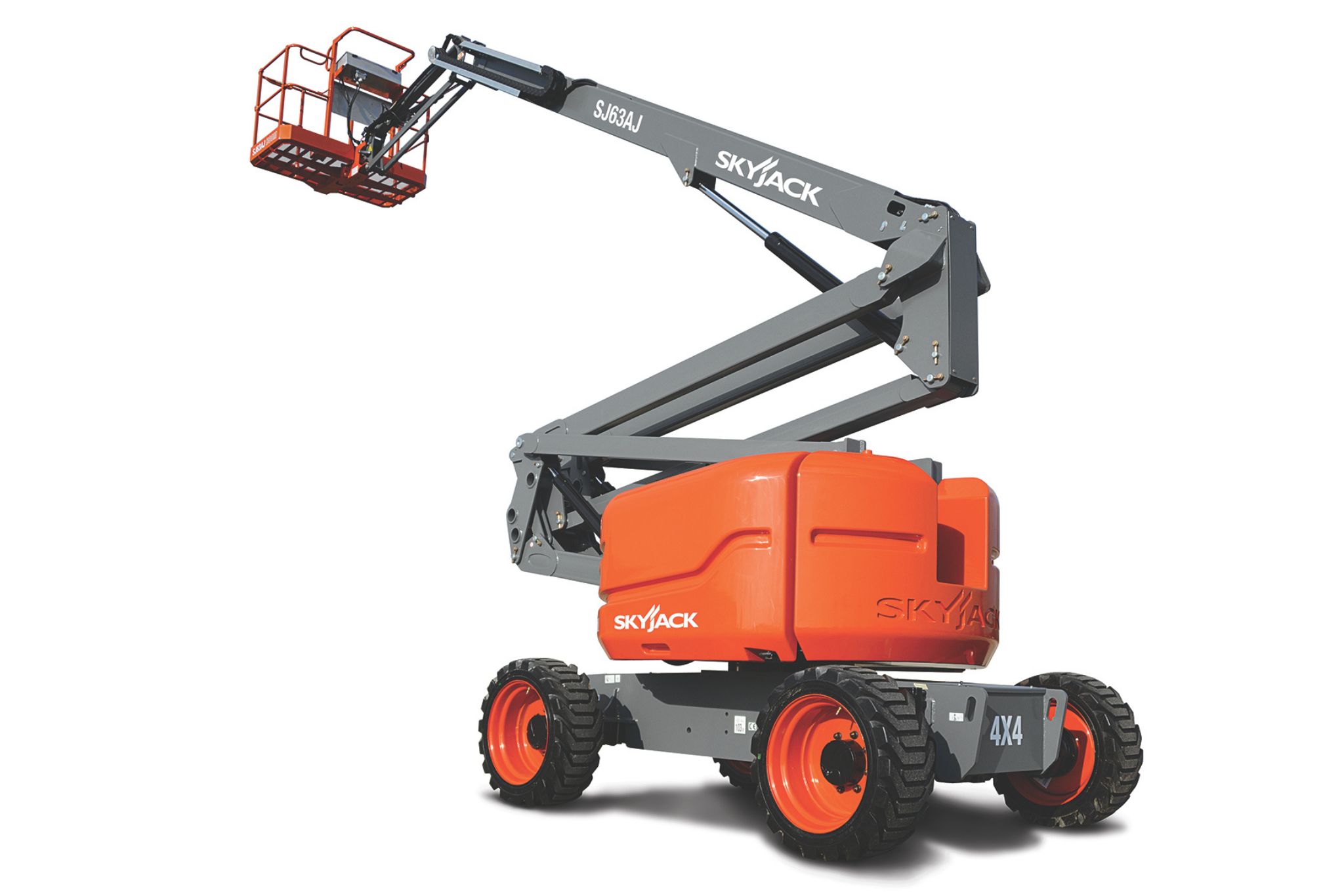
Articulated Boom Lifts
These lifts are flexible and versatile, offering high reach and precise positioning for obstacle-laden jobs.
• Industrial plant maintenance – These are employed for regular servicing, repairs, and inspections of machinery, pipelines, and other elevated systems within manufacturing facilities. This allows teams to reach essential areas swiftly and safely.
• Construction and infrastructure projects are a perfect fit. They're great for working at height on expansive sites, like building structures, bridges, and other essential infrastructure. Reach and flexibility are key to keeping everything running smoothly.
• Equipment installation and inspection – Makes it easier to install heavy or complex equipment and carry out detailed inspections in elevated or hard-to-access locations with better precision and control.
• Steel structure erection – Supports the safe assembly and positioning of steel frameworks, where workers need stable access at different heights and angles during the construction process.
• Facility maintenance and repair work – Useful for day-to-day upkeep tasks such as lighting repairs, cleaning, painting, and general maintenance in commercial and industrial facilities.